PVDF Valve Material Properties & Lifespan
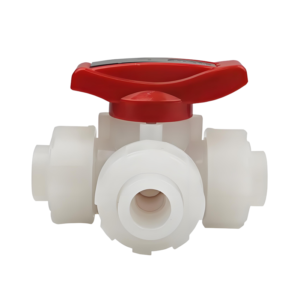
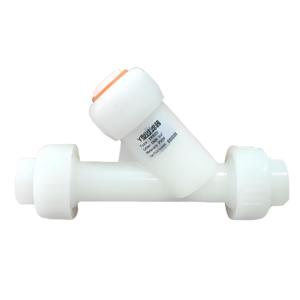
Polyvinylidene fluoride, referred to as PVDF, is a monomer formed by trifluoroethylene, hydrofluoric acid, and zinc powder, and after polymerization generates a white crystalline solid. It is a homopolymer. PVDF has excellent heat and cold resistance, chemical resistance, and excellent physical and mechanical properties—qualities that make it ideal for components like the PVDF true union ball valve and the PVDF Y strainer, which leverage these traits for reliable performance in demanding systems. These characteristics also make PVDF an excellent material for a pvdf valve.
The max working temperature of PVDF pipes is 200℃, and they can be used for a long time in the temperature range of -30℃ ~ 150℃. With its excellent corrosion resistance, long service life, and high safety performance, PVDF products—including the PVDF true union ball valve and the PVDF Y strainer—are widely used in severe environments characterized by high temperature, high pressure, low temperature, high vacuum, and heavy corrosion. Additionally, for applications requiring different material properties, the UPVC Y strainer offers a versatile alternative, ensuring comprehensive solutions for various industrial needs.
The max working temperature of PVDF pipes is 200℃, and they can be used for a long time in the temperature range of -30℃ ~ 150℃. With its excellent corrosion resistance, long service life, and high safety performance, PVDF products—including the PVDF true union ball valve and the PVDF Y strainer—are widely used in severe environments characterized by high temperature, high pressure, low temperature, high vacuum, and heavy corrosion. Additionally, for applications requiring different material properties, the UPVC Y strainer offers a versatile alternative, ensuring comprehensive solutions for various industrial needs.