
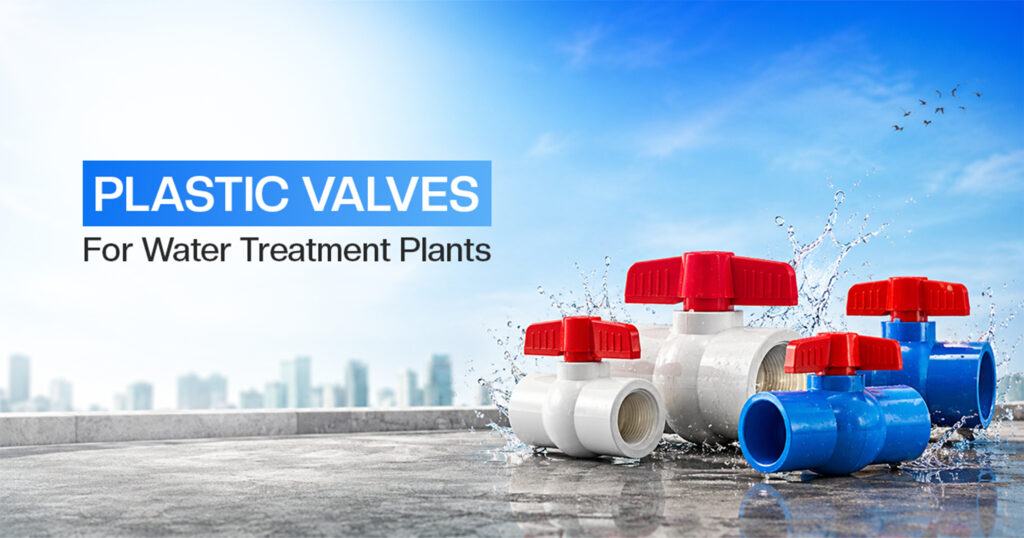
Plastic valves (UPVC, CPVC and PVDF) are the preferred choice for water treatment plants because they resist corrosion, handle chlorine and chemical dosing, and cost less to maintain than metal valves. Zeta International supplies imported plastic valves for water treatment, ETP, swimming pool and hatchery systems across all 64 districts of Bangladesh.
Why use plastic valves in water treatment plants?
Water treatment plants handle chlorine, acids, alkalis, coagulants and salty or mineral-rich water. These liquids attack metal valves, causing rust, scaling, leaks and costly replacements. Plastic valves avoid these problems because the material itself does not corrode.
The main advantages are:
- Chemical resistance: stable against chlorine, sodium hypochlorite, sulphuric acid, caustic soda and many dosing chemicals.
- No rust or scale: the inner surface stays smooth, so flow and sealing stay consistent.
- Light weight: easier to carry, mount and support than cast iron or stainless steel valves.
- Lower lifetime cost: less downtime and fewer replacements, even where the purchase price is similar.
- Clean water quality: no metal ions leaching into treated water.
- Easy installation: solvent-cement, threaded or true union connections make fitting and servicing quick.
These traits matter in Bangladesh, where humidity, high-iron groundwater and tropical heat shorten the life of metal fittings. Always check the pressure and temperature rating of the specific valve before specifying it, since plastics derate as the liquid gets hotter.
Types of plastic valves used in water treatment
Different points in a plant need different valve designs. Zeta stocks the main types, including the following.
| Valve type | Best use in a plant | Why it fits |
|---|---|---|
| Ball valve (true union) | Isolation on water and chemical lines | Quick quarter-turn shut-off; union ends allow easy removal |
| Butterfly valve | Large-diameter water lines | Compact, light and economical for big pipes |
| Diaphragm valve | Dosing and corrosive chemicals | Diaphragm isolates the fluid from moving parts; manual or pneumatic |
| Check valve | Pump discharge lines | Stops backflow and protects pumps |
| Y strainer | Upstream of pumps, meters and membranes | Catches debris before it damages equipment |
| Sampling valve | Quality testing points | Safe, controlled sample collection |
| Safety valve | Pressure protection | Relieves excess pressure in the line |
| Flow meter | Dosing and process lines | Monitors flow rate in real time |
The most common valve in small water lines is the UPVC ball valve, with a white or blue body, a red handle and threaded or socket ends. Zeta also offers UPVC, CPVC, PVDF and clear PVC valve ranges.
Where each valve goes in the treatment process
- Intake and raw water: butterfly and ball valves isolate sections and control flow.
- Filtration and softening: ball and check valves manage backwash and protect pumps.
- Chemical dosing: diaphragm valves, ball valves and flow meters deliver chlorine, acid or coagulant accurately.
- Reverse osmosis and desalination: strainers, check valves and sampling valves protect membranes and monitor quality.
- Effluent treatment (ETP): corrosion-proof valves handle aggressive wastewater without failing.
How to choose the right plastic valve
Match the valve to the liquid, the temperature and the pressure. Use this checklist:
- Material: UPVC for cold water and general chemicals, CPVC for hot lines, PVDF for aggressive or high-purity chemicals.
- Valve type: ball for on/off, diaphragm for dosing and corrosives, butterfly for large pipes, check to stop backflow.
- Size and connection: match pipe diameter and choose socket, threaded, flanged or true union ends.
- Pressure and temperature: read the rating on the datasheet, because plastic strength drops as the temperature rises.
- Operation: manual handle, worm gear, or pneumatic actuator for automated plants.
- Seals: pick EPDM or FKM (Viton) seals to suit the chemical being handled.
UPVC vs CPVC vs PVDF valves
Temperature limits are approximate; confirm with the manufacturer’s datasheet.
| Material | Typical use | Approx. max temperature | Chemical resistance |
|---|---|---|---|
| UPVC | Cold water, general chemical lines | About 60°C | Good |
| CPVC | Hot water, hotter chemical lines | About 90°C | Very good |
| PVDF | Strong acids, solvents, high-purity systems | Above 100°C | Excellent |
Why buy plastic valves from Zeta International
Zeta International has supplied water and plumbing products in Bangladesh since 2015, building on more than 45 years of industry heritage. Its website lists these strengths:
- Full valve range in UPVC, CPVC, PVDF and clear PVC, plus measuring valves.
- Imported premium products for consistent quality.
- Wholesale and retail supply for contractors, plant owners and traders.
- Technical expertise to help match valves to your process.
- Nationwide delivery to all 64 districts.
- Custom products for special project needs.
Zeta also provides ETP, swimming pool, hatchery and industrial water solutions, so its team understands how valves work inside a real plant.
Frequently asked questions
Why are plastic valves used in water treatment plants? They do not rust or corrode, resist chlorine and treatment chemicals, weigh little and cost less to maintain than metal valves.
Which plastic valve is best for chemical dosing? Diaphragm valves and true union ball valves are common choices. Pick PVDF for aggressive acids and solvents, and UPVC for milder chemicals.
Are UPVC valves suitable for hot water? No. UPVC suits temperatures up to about 60°C. Use CPVC valves for hot water or hot chemical lines.
What is a true union ball valve? It is a ball valve with union ends, so you can unscrew and remove the valve body without cutting the pipe. This makes servicing easier.
Do plastic valves work in effluent treatment plants (ETP)? Yes. Plastic valves handle corrosive wastewater well, which is why they are widely used in ETP and chemical systems.
Where can I buy plastic valves in Bangladesh? Zeta International sells UPVC, CPVC, PVDF and clear PVC valves at wholesale and retail, with delivery to all 64 districts.
Order plastic valves from Zeta International
Share your liquid, pipe size, pressure and quantity, and the team will recommend suitable valves.
- Address: 137 Haji Osman Gani Road (Kamru Mansion), Alubazar, Dhaka
- Phone / WhatsApp: 01921-696688
- Email: info@zetabd.com
- Website: zetabd.com · Plastic valves · Contact page