
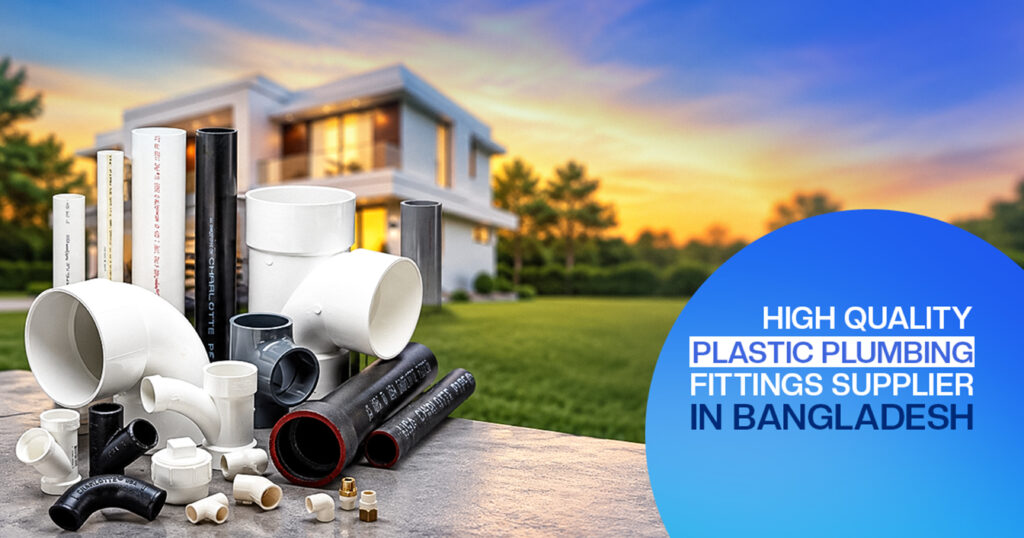
How to Choose a High Quality Plastic Plumbing Fittings Supplier in Bangladesh
Quick answer: A high quality plastic plumbing fittings supplier sells fittings made from virgin material that match a recognised standard (such as ANSI SCH 80 or DIN PN16), offers the right material for your fluid and temperature (UPVC, CPVC or PVDF), supports you with technical advice, and delivers consistently. Check the wall thickness, the markings, the joint fit and the supplier’s track record before you buy.
Key Takeaways
- Match the material to the job: UPVC for cold water and many chemicals, CPVC for hot water and heat, PVDF for aggressive chemicals and high purity.
- Standards matter. Look for clear ANSI SCH 80, ANSI SCH 40 or DIN PN16 markings.
- A good supplier gives technical guidance, not just a price.
- Wholesale and retail availability, nationwide delivery and after-sales support separate reliable suppliers from risky ones.
Why Plastic Plumbing Fittings Are Replacing Metal
Plastic fittings have become the first choice for water, chemical and industrial systems across Bangladesh. The reasons are practical:
- No corrosion. Plastic does not rust, scale or pit, so pipelines stay clean for years.
- Lightweight. Installation is faster and needs less labour and support structure.
- Smooth bore. Flow stays efficient and scaling is reduced.
- Chemical resistance. Plastics tolerate acids, alkalis and salts that destroy metal.
- Lower lifetime cost. Fewer leaks, fewer replacements, less maintenance.
But these benefits only appear when the fitting is made well. A poor fitting can crack under pressure, leak at the joint or fail early under heat. That is why choosing the supplier matters as much as choosing the product.
What Does “High Quality” Mean for Plastic Plumbing Fittings?
Quality is not a marketing word. It can be checked. Here are the points that count.
- Virgin raw material
Quality fittings are moulded from virgin resin. Recycled or heavily filled material makes fittings brittle, discoloured and unreliable under pressure. Consistent colour and a clean, glossy finish are good first signs.
- Correct wall thickness
Wall thickness decides pressure rating. Schedule 80 fittings have thicker walls than Schedule 40 and handle higher pressure, which is why Schedule 80 is common in industrial and chemical lines. Ask for the schedule rating and compare the physical wall against it.
- Dimensional accuracy
Sockets and threads must match the pipe exactly. A loose socket weakens the solvent-cement joint. A socket that is too tight can stress and crack the fitting. Precise moulding gives uniform joints.
- Clear markings
Reputable fittings carry size, material, schedule or pressure class, and standard markings. Unmarked fittings should be treated with caution.
- Consistent batches
The tenth order should match the first. Good suppliers control batch quality and keep stock, so projects do not stall.
UPVC vs CPVC vs PVDF: Which Fitting Do You Need?
Choosing the wrong material is one of the most common and costly mistakes. This comparison gives a quick guide.
| Feature | UPVC | CPVC | PVDF |
| Typical max temperature | Around 60°C | Around 90°C | Around 140°C |
| Best for | Cold water, irrigation, many chemicals | Hot water, heated industrial lines | Aggressive chemicals, high purity, high temperature |
| Chemical resistance | Good | Very good | Excellent |
| Relative cost | Low | Medium | High |
| Common applications | Water supply, pools, aquaculture | Hot water, process lines | Semiconductor, PCB, chemical plants |
Temperatures are typical guide values. Always confirm the exact rating with the manufacturer, because pressure capacity falls as temperature rises.
When to choose UPVC fittings
UPVC (unplasticised PVC) is the economical, dependable choice for cold-water distribution, irrigation, swimming pool circulation, aquaculture and water treatment. It resists many acids and salts and is easy to join with solvent cement.
When to choose CPVC fittings
CPVC handles hotter fluids than UPVC and keeps its strength at higher temperatures. It suits hot-water lines, heated process water and many industrial applications where UPVC would soften.
When to choose PVDF fittings
PVDF is a premium fluoropolymer. It resists strong acids, solvents and oxidising chemicals and stays stable at high temperatures. That makes it the standard choice in semiconductor fabrication, electroplating, PCB manufacturing and demanding chemical processing.
Understanding the Standards: ANSI SCH 80, SCH 40 and DIN PN16
Standards tell you how a fitting is built and what it can handle.
- ANSI SCH 80 means thick-walled fittings with a high pressure rating, widely used for UPVC and CPVC in industrial service.
- ANSI SCH 40 means standard wall thickness. It is common for general-purpose and clear PVC systems.
- DIN PN16 is a European pressure rating, meaning the fitting is designed for a nominal pressure of 16 bar at reference temperature. It is common for PVDF systems.
Ask your supplier which standard each fitting follows and make sure it matches your system design.
7 Questions to Ask Before You Choose a Supplier
Use this checklist when comparing suppliers:
- Which materials and standards do you stock? A broad range (UPVC, CPVC, PVDF, clear PVC) shows real capability.
- Is the raw material virgin?
- Can you advise on the right material for my fluid, temperature and pressure?
- Do you supply valves, pipes and accessories too? One source for the full system avoids compatibility problems.
- Do you offer wholesale and retail? This signals stock depth and flexibility.
- How do you deliver, and where?
- What is your after-sales and technical support?
A supplier who answers confidently and in detail is almost always a better partner than one who only quotes a price.
Common Mistakes When Buying Plastic Plumbing Fittings
- Buying on price alone. The cheapest fitting often costs the most after one failure.
- Mixing materials carelessly. Joining incompatible plastics or using the wrong cement leads to leaks.
- Ignoring temperature. UPVC in a hot line will soften and deform.
- Skipping pressure ratings. Always check the schedule or PN class against your operating pressure.
- Forgetting the whole system. Pipes, fittings and valves should be compatible and sourced to the same standard.
Where Plastic Fittings Are Used
High quality plastic fittings serve many sectors: water treatment, effluent treatment plants (ETP), swimming pools, aquaculture and hatcheries, agricultural irrigation, seawater desalination, electroplating, PCB manufacturing, semiconductor plants, chemical industry, and residential and commercial plumbing. Each has different demands, which is why material selection and supplier expertise matter.
Why Zeta International Is a Trusted Plastic Plumbing Fittings Supplier
Zeta International was founded in 2015 and is built on more than 45 years of industry heritage. From Dhaka, it supplies customers across all 64 districts of Bangladesh with imported, premium water and plumbing products, for both wholesale and retail buyers.
The fittings range includes:
- UPVC Fittings (ANSI SCH 80)
- CPVC Fittings (ANSI SCH 80)
- PVDF Fittings (DIN PN16)
- Clear Fittings (ANSI SCH 40)
Because Zeta also supplies plastic pipes, plastic valves and customized accessories, you can source a complete, compatible system from one place, backed by technical expertise and customer support.
Frequently Asked Questions
What is a high quality plastic plumbing fittings supplier?
It is a supplier that provides fittings made from virgin material, built to recognised standards such as ANSI SCH 80 or DIN PN16, with correct markings, consistent quality, technical advice and reliable delivery.
Which is better for plumbing: UPVC or CPVC fittings?
Neither is better in every case. UPVC suits cold water and many chemicals at lower cost. CPVC is better where hot water or higher temperatures are involved.
What is the difference between SCH 40 and SCH 80 fittings?
SCH 80 has thicker walls and a higher pressure rating than SCH 40. SCH 80 is preferred for industrial and higher-pressure applications.
When should I use PVDF fittings?
Use PVDF for strong acids, solvents, high-purity systems or high temperatures, such as in semiconductor, PCB, electroplating and chemical plants.
How can I tell if a plastic fitting is good quality?
Check for virgin-material appearance, even colour, accurate wall thickness, clean moulding, precise sockets or threads, and clear size and standard markings.
Do plastic plumbing fittings last long?
Properly selected and installed fittings can last for decades because they do not rust or corrode. Lifespan depends on correct material choice, pressure, temperature and installation.
Does Zeta International deliver across Bangladesh?
Yes. Zeta International delivers to all 64 districts of Bangladesh and serves both wholesale and retail customers.
Get the Right Fittings for Your Project
Choosing the right material and the right supplier protects your system, your budget and your reputation. Explore the full range at zetabd.com or talk to the Zeta International team for advice on your application.
Zeta International 137, Haji Osman Gani Road (Kamru Mansion), Alubazar, Dhaka Phone / WhatsApp: 01921-696688 Email: info@zetabd.com